1869
Palmerston
On 5 February 1869 surveyor George Goyder landed 135 men and women at Port Darwin and laid out a town called Palmerston.
or swipe up to begin
Long before it had an English name, this water was Larrakia country.
The Larrakia people lived around the harbour and the greater Darwin region, moving through it by canoe to fish and trade. Their trading routes reached Southeast Asia, and songlines tied the coast to country far inland.
On 9 September 1839, HMS Beagle sailed into the harbour.
Lieutenant John Lort Stokes named it after Charles Darwin, his old shipmate from the Beagle's earlier voyage around the world. Darwin himself never came here. The name arrived on a chart long before any town did.
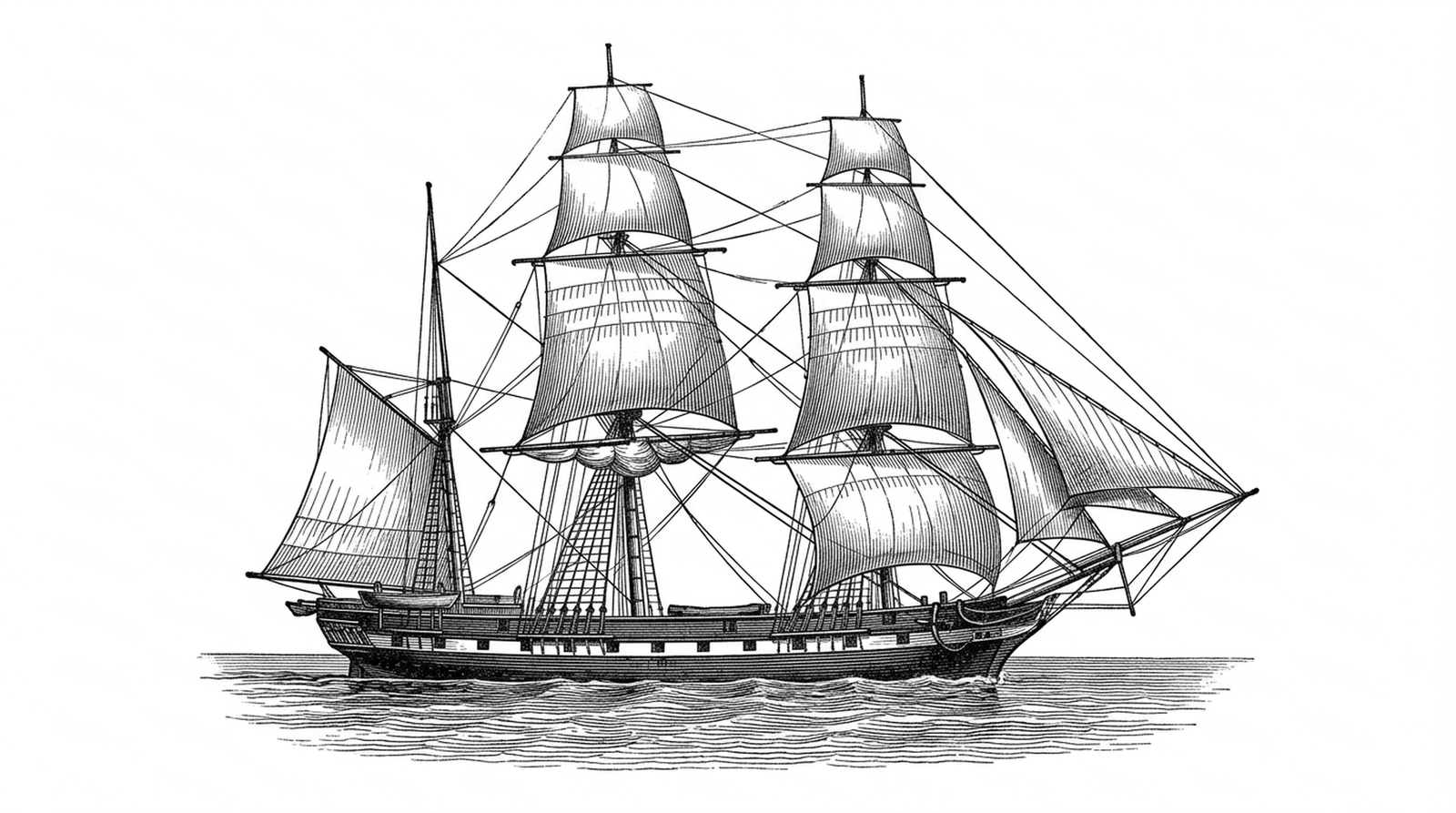
Thirty years later, the British came back to stay.
Keep scrolling: the story moves sideways here, the way the town grew along the harbour.
On 5 February 1869 surveyor George Goyder landed 135 men and women at Port Darwin and laid out a town called Palmerston.
An undersea cable from Java came ashore here in November 1871. A year later the 3,200-kilometre Overland Telegraph Line reached Port Augusta, and Australia was wired to the world.
In 1911 the town took the harbour's name, and the Northern Territory passed from South Australia to the Commonwealth.
Four Japanese aircraft carriers, Akagi, Kaga, Hiryū and Sōryū, launch their aircraft. The last are airborne by 8:45 am.
The harbour was full of ships. Within minutes, it was full of smoke.
Two raids struck that day, by 242 aircraft in all. It was the first and largest of about a hundred air attacks on northern Australia that ran until November 1943.
19 February 2027 · 85 years. Each year Darwin remembers the raids at the Cenotaph on The Esplanade, with a separate service at the USS Peary Memorial in Bicentennial Park.
Nine ships went down in and around the harbour.
Around 3:30 on Christmas morning, the eye crossed the coast near Fannie Bay.
About 47,000 people lived in Darwin that night. By New Year most of them had been flown or driven out of a city that was mostly gone. The Darwin you see today is the city they came back and rebuilt.
The sun sets over the water.
The harbour still breathes twice a day, as it did for the Larrakia, for Stokes, and on the morning of the raid. Watch it from the shore: saltwater crocodiles live here all year, and stingers are common from about October to May.
Not for swimming. Not for navigation. For boating, use the Bureau of Meteorology tide tables.
Twice a day the harbour forgets, and remembers.